


Reduce Maintenance Costs
Move from scheduled maintenance to condition-based maintenance
Maintenance is one of the largest operating costs of every commercial fleet.
Traditionally, maintenance is scheduled according to fixed mileage or time intervals. While simple to manage, this approach often leads to unnecessary servicing of lightly used vehicles or delayed maintenance for vehicles operating under demanding conditions.
The challenge is not performing more maintenance.
The challenge is knowing when maintenance is really needed.

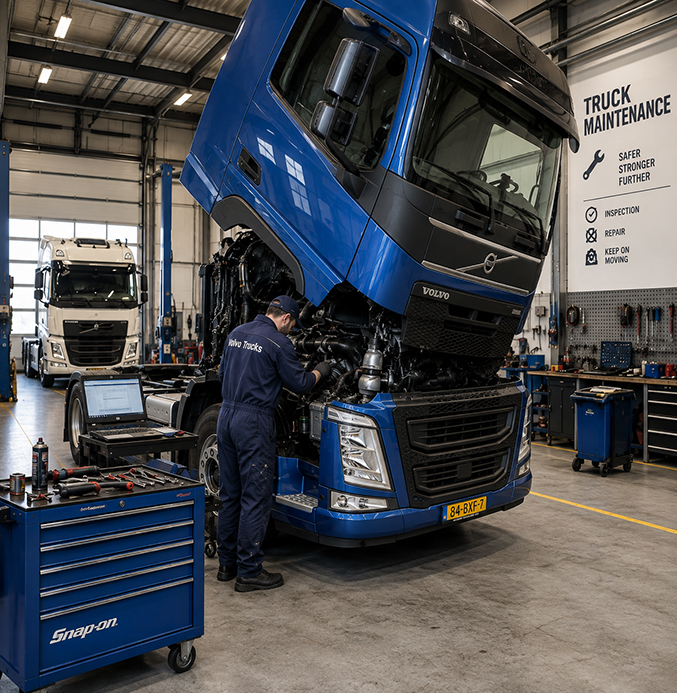
Why maintenance costs matter
Every fleet operator aims to maximise vehicle availability while minimising maintenance costs.
Effective maintenance helps to:
- Reduce repair costs
- Prevent unexpected failures
- Extend component lifetime
- Increase vehicle availability
- Improve workshop planning
- Reduce unnecessary parts replacement
- Lower the Total Cost of Ownership
- Improve fleet profitability
The key is understanding how a vehicle has actually been used, rather than relying on mileage alone.
From scheduled to condition-based maintenance
For many years, maintenance has been based on fixed service intervals.
A truck receives maintenance every 60,000 kilometres, regardless of whether those kilometres were driven on motorways or in heavy urban traffic with frequent braking, idling and high engine loads.
Squarell enables the next step.
By combining service information with actual vehicle operating conditions, maintenance can increasingly be based on vehicle condition instead of fixed intervals.
This helps workshops and fleet managers make better maintenance decisions while reducing unnecessary servicing and preventing costly failures.

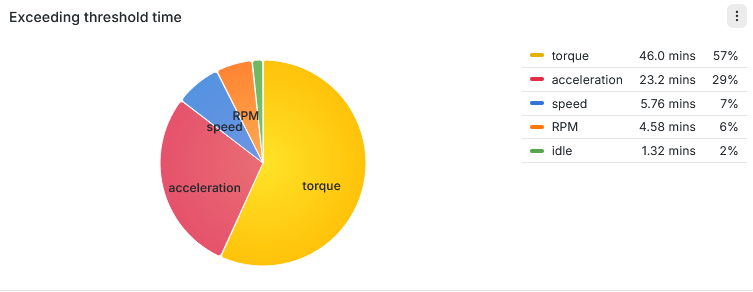
How Squarell helps
Squarell continuously collects harmonised vehicle information from multiple vehicle systems.
By analysing both vehicle condition and vehicle utilisation, fleet applications gain a much more complete picture of component wear than mileage alone can provide.
Instead of simply answering:
“When is the next service due?”
Squarell helps answer:
“Does this vehicle actually need maintenance now?”
Building the Solution
The Reduce Maintenance Costs Challenge combines information from the Uptime Solution and the Vehicle Performance Solution.
Together they provide the information needed to support condition-based maintenance.
Business Value
Fleet operators using Squarell Vehicle Intelligence benefit from:
- Lower maintenance costs
- Fewer unnecessary service visits
- Earlier detection of developing faults
- Better workshop planning
- Longer component lifetime
- Reduced roadside breakdowns
- Improved vehicle availability
- Lower Total Cost of Ownership
Why Squarell?
Most maintenance systems focus on when maintenance should be scheduled.
Squarell focuses on why maintenance is required.
By combining harmonised information from the engine, transmission, brakes, tyres, exhaust system and actual vehicle usage, Squarell provides the intelligence needed to move from fixed maintenance schedules towards condition-based maintenance.
The result is better maintenance decisions, lower operating costs and higher fleet availability.
Related Solutions
Uptime
Supporting Parameter Groups:
- Maintenance (MAI)
- Brake Data (BRK)
- Truck TPMS (TPMS)
- DM1 Active Diagnostics
- Warnings
Vehicle Performance
Supporting Parameter Groups:
- Engine Data (ENG)
- Fuel System Data (FSD)
- Transmission Data (TRA)
- Exhaust Data (EXH)
Looking Ahead
As commercial vehicles become increasingly connected, maintenance strategies will continue to evolve.
Squarell provides the harmonised Vehicle Intelligence that enables software providers, workshops and fleet operators to gradually move from preventive maintenance to condition-based maintenance, making maintenance more efficient, more predictable and more cost-effective.

