


Fuel System Data (FSD)
Know how fuel is stored, supplied and consumed
Fuel efficiency starts with understanding more than just how much fuel a vehicle consumes.
The Squarell Fuel System Data Parameter Group combines fuel consumption, tank information and fuel delivery system data into one harmonised message. It provides insight into both the amount of energy being used and the condition under which fuel is supplied to the engine.
This helps fleet applications monitor fuel efficiency, detect abnormal conditions and compare fuel performance across different vehicle makes and models.
Specifications
Name: Fuel System Data
Header: $FSD1
Subscription: Yes
Solution: Vehicle Performance
Trigger: Configurable
Output port: Selectable
Typical Applications
The Fuel System Data Parameter Group supports applications such as:
- Fuel consumption monitoring
- Fuel efficiency analysis
- Fuel system condition monitoring
- Range and refuelling applications
- Fuel cost analysis
- Driver efficiency applications
- Vehicle performance dashboards
- Remote diagnostics
- Sustainability and CO₂ reporting
Key Parameters
Fuel Consumption
Monitor how much fuel the vehicle actually uses.
Typical parameters include:
- Fuel Rate
- Total Fuel Used
- Trip Fuel Used
- Idle Fuel Used
- Average Fuel Consumption
- Instantaneous Fuel Consumption
Where sufficient source data is available, Squarell can combine these values with other Parameter Groups to analyse fuel consumption in relation to distance, engine operation and driver behaviour.
Fuel Tank
Monitor available fuel and refuelling information.
Typical parameters include:
- Fuel Tank Level
- Fuel Tank Level 2
- Fuel Temperature
- Fuel Tank Capacity
- Fuel Used Since Refuelling
- Refuelling Event
Fuel Delivery System
Monitor the conditions under which fuel is supplied to the engine.
Typical parameters include:
- Engine Fuel Delivery Pressure
- Fuel Injector Metering Rail Pressure
- Commanded Fuel Rail Pressure
- Commanded Fuel Injection Control Pressure
- Water in Fuel Indicator
These parameters can provide valuable information for remote diagnostics and help identify abnormalities in the fuel delivery system before they result in performance problems.
Fuel & AdBlue Efficiency
Fuel and AdBlue consumption are closely related to vehicle operation and exhaust aftertreatment.
Where the required information is available, the Parameter Group can provide:
- AdBlue Level
- AdBlue Consumption
- Total AdBlue Used
- Fuel-to-AdBlue Consumption Ratio
- Abnormal Fuel-to-AdBlue Ratio
Monitoring the relationship between fuel and AdBlue consumption can help identify unusual operating conditions or changes in aftertreatment performance.
Fuel Type
Where supported by the vehicle, information about the configured or reported fuel type can be made available.
Examples may include:
- Diesel
- Biodiesel blend
- HVO / renewable diesel
- Alternative fuel type
- Fuel type identification
Availability depends on the information provided by the vehicle manufacturer.
The complete Parameter Group and parameter definitions are available to Squarell partners.

Visualisation
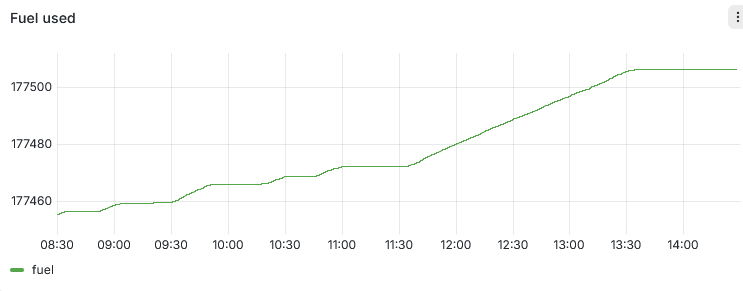
Fuel information can be presented in dashboards showing consumption, tank level, fuel rate and fuel system conditions over time.
Combining Fuel System Data with Driver Performance and Engine Data makes it possible to analyse why fuel consumption changes instead of simply reporting how much fuel was consumed.
Business Value
The Fuel System Data Parameter Group helps fleet operators to:
- reduce fuel consumption
- identify inefficient vehicle operation
- monitor fuel system performance
- detect abnormal fuel conditions
- improve refuelling planning
- compare fuel efficiency across mixed fleets
- support driver efficiency programmes
- reduce operating costs
- support CO₂ and sustainability reporting
Why Squarell?
Fuel information differs considerably between vehicle manufacturers. Even apparently simple values such as fuel level, fuel rate and total fuel used may originate from different networks, messages and calculation methods.
Squarell interprets this manufacturer-specific information inside the IVMS and converts it into one consistent Fuel System Data Parameter Group.
This allows fleet applications to work with harmonised fuel information instead of manufacturer-specific CAN data.


