


Trailer Cargo (TCAR)
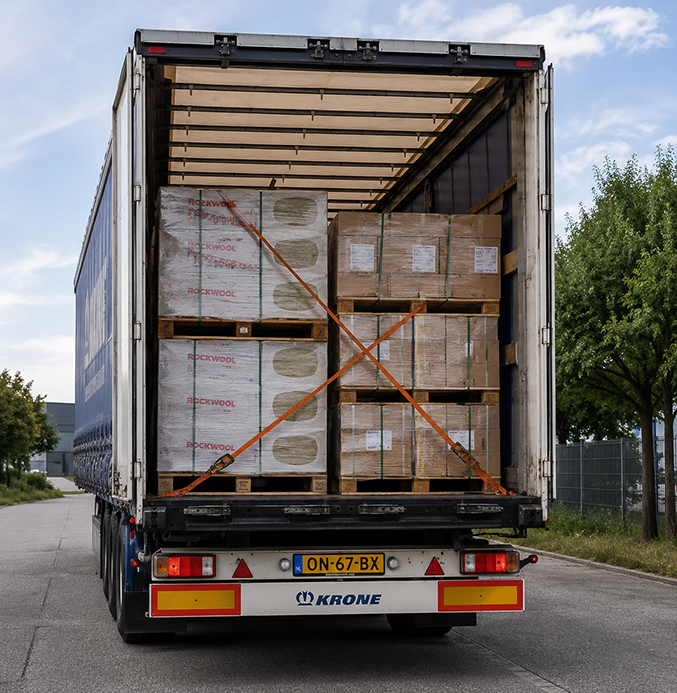
Know the load. Understand how the trailer is carrying it.
Knowing whether a trailer is loaded is useful. Knowing how the load is distributed and how the trailer responds to it provides much more valuable operational information.
The Trailer Cargo Parameter Group provides information about axle loads, total cargo weight, lateral acceleration and trailer height functions.
This gives fleet applications insight into trailer loading, weight distribution and operational conditions without requiring a separate cargo management system.
Specifications
Name: Trailer Cargo
Header: $TRAILERCARGO1
Subscription: Yes
Solution: Trailer Box
Trigger: Every 10 seconds
Buffer: Yes, default
Server header: Time and location
For multi-trailer combinations, an individual message is generated for each trailer. The trailer number is reflected in the message header, for example $TRAILERCARGO2 and $TRAILERCARGO3. The same parameter structure is used for trailers 1 through 5.
Key Parameters
Individual Axle Loads
Monitor the static vertical load on each individual trailer axle.
The Parameter Group supports:
- Axle Load 1
- Axle Load 2
- Axle Load 3
- Axle Load 4
- Axle Load 5
- Axle Load 6
This provides much more information than total trailer weight alone. Differences between axle loads can reveal how the cargo weight is distributed across the trailer.
Total Axle Load
The combined static vertical load of the trailer axles provides an immediate indication of the overall trailer load.
This can be used for:
- Load monitoring
- Operational planning
- Weight distribution analysis
- Identifying loaded and unloaded operation
Cargo Weight
Provides the calculated cargo weight carried by the trailer.
This gives fleet applications a direct indication of how much payload is being transported and can help distinguish between:
Empty → Partially Loaded → Fully Loaded
The PG provides both the summed axle load and cargo weight as separate parameters.
Lateral Acceleration Counter
Counts how often lateral acceleration exceeds a defined threshold.
This adds an interesting dimension to cargo monitoring. It provides information about how often the trailer has experienced significant lateral forces during operation.
For certain cargo types, this information may be useful for analysing transport conditions and identifying unusually demanding journeys.
Ride Height
Indicates whether the trailer body has reached its requested normal ride height.
This allows the application to determine whether the suspension system has positioned the trailer correctly for normal operation.
Traction Help / Load Transfer
Indicates whether the trailer’s traction-help function is active.
When supported by the vehicle combination, axle load can be redistributed to increase load on the driven axle and improve traction.
Ramp Level
Provides information about the trailer’s height position during loading and unloading.
The Parameter Group indicates:
- Whether the requested ramp level has been reached
- Which ramp-level position is active
This can provide valuable operational information about loading and unloading activities.
The complete Parameter Group and parameter definitions are available to Squarell partners.
ISO 11992 & Squarell Checker Box
ISO 11992 is a point-to-point communication network between truck and trailer. The Squarell Trailer Box therefore reads the active communication non-intrusively through CANcliQ, without interfering with the truck-to-trailer connection.
When the trailer is disconnected, the Squarell Checker Box can communicate actively with the trailer to retrieve additional information that may not be available during normal operation.
Together, these technologies allow Squarell to obtain both live and additional trailer information while respecting the special architecture of the ISO 11992 network.
From trailer weight to operational intelligence
Trailer Cargo provides more than a single payload value.
By combining:
Cargo Weight → Individual Axle Loads → Ride Height → Load Transfer → Ramp Position
an application can build a much more complete picture of the trailer’s operational condition.
For example:
Loaded + normal ride height
The trailer is loaded and ready for transport.
Loaded + ramp level active
The trailer may be loading or unloading.
Uneven axle loads
The cargo distribution may require attention.
Cargo weight decreasing + ramp activity
An unloading operation may be taking place.
The last examples are possible application-level interpretations, rather than parameters directly reported by this PG.
Typical Applications
A simple TPMS warning tells you that something is wrong.
Trailer Alert adds the information needed to act:
Which trailer → Which axle → Which tyre → What happened → Pressure → Temperature → Air loss
This enables a fleet application to immediately identify the affected tyre and determine the appropriate response.
Business Value
The Trailer Cargo Parameter Group helps fleet operators to:
- Know how much cargo a trailer is carrying
- Monitor load distribution across individual axles
- Improve trailer utilisation
- Identify loaded and unloaded operation
- Gain insight into loading and unloading activities
- Monitor trailer ride height
- Support operational planning
- Analyse demanding transport conditions
- Monitor multiple trailers within a Road Train
Why Squarell?
Trailer load information is generated by the trailer’s own electronic systems and communicated through ISO 11992.
Squarell collects the available information and converts it into a harmonised Trailer Cargo Parameter Group that can be used directly by fleet applications.
Instead of simply knowing where the trailer is, operators can understand what it is carrying and how it is being operated.
Related Product
Trailer Box
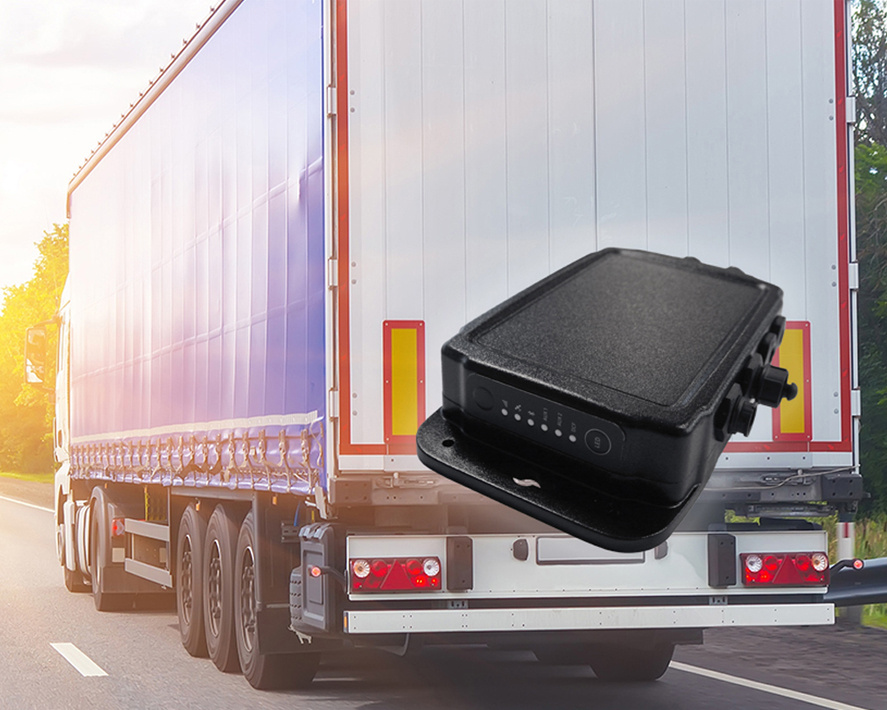
The Squarell Trailer Box provides non-intrusive access to the communication between truck and trailer and converts the available ISO 11992 information into harmonised trailer Parameter Groups.
With integrated modem and GNSS communication, this information can be transmitted directly to the fleet application.
Trailer Cargo — Know what your trailer is carrying, not just where it is.

