


Trailer Chassis (TCHA)
Know the trailer behind the truck
A truck can be connected to many different trailers during its operational life.
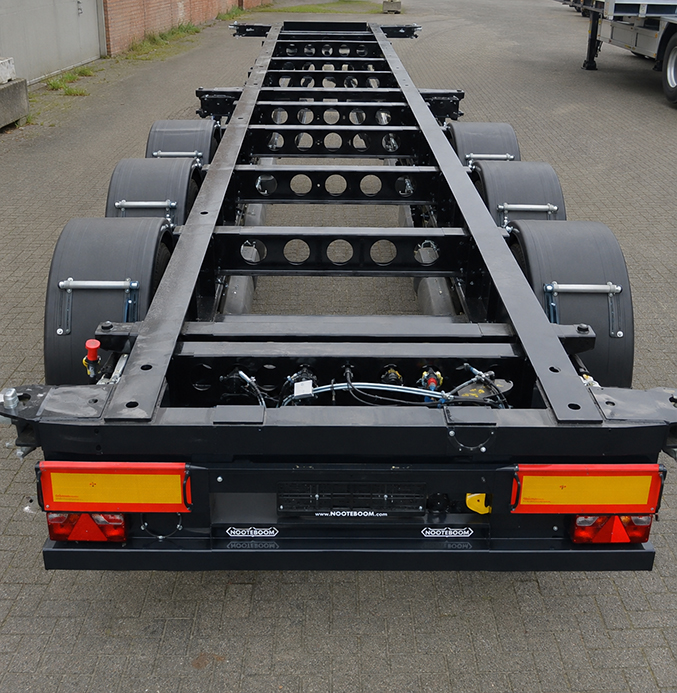
For fleet applications, knowing that a trailer is connected is only the beginning. Its type, number of axles, dimensions and chassis configuration can all influence how the combination is operated.
The Trailer Chassis Parameter Group provides structural and operational information about the connected trailer and makes this information available in a harmonised format.
It allows fleet applications to understand what kind of trailer is connected and how its chassis is configured.
Specifications
Name: Trailer Chassis
Header: $TRAILERCHASSIS1
Subscription: Yes
Solution: Trailer Box
Trigger: Engine On, Engine Off and Event
Buffer: Yes, default
Bluetooth: Yes
Server header: Time and location
For multi-trailer combinations, an individual message is generated for each trailer. The trailer number is reflected in the message header, for example $TRAILERCHASSIS2 and $TRAILERCHASSIS3. The same parameter structure can be used for trailers 1 through 5.
Key Parameters
Coupled / Decoupled Status
Indicates whether the trailer is currently connected or disconnected.
This provides an important operational event for fleet applications and can help establish when trailers are exchanged or combinations are changed.
Trailer Configuration
The Parameter Group provides information about the physical configuration of the trailer, including:
- Trailer type
- Number of axles
- Track width
- Individual axle positions
Different trailer types can be identified, including semi-trailers, centre-axle trailers, full trailers and several towing configurations.
This allows the back office to understand the basic configuration of the trailer without requiring this information to be entered manually.
Trailer Dimensions
Available dimensional information includes:
- Trailer length
- Chassis height
- Total height above ground at the front
- Total height above ground at the rear
These parameters provide useful information about the physical characteristics of the trailer.
Chassis Safety & Control
The Trailer Chassis PG also provides the status of important chassis control functions when these are available on the trailer.
Steering Axle Lock
Indicates whether the trailer steering axle is locked or unlocked.
Yaw Control
Indicates whether the trailer’s yaw-control function is enabled or disabled.
ROP System
Provides the status of the trailer’s ROP system when available.
Together, these parameters provide additional insight into the current chassis configuration and active trailer control functions.
The complete Parameter Group and parameter definitions are available to Squarell partners.
ISO 11992 & Squarell Checker Box
ISO 11992 is a point-to-point communication network between truck and trailer. The Squarell Trailer Box therefore reads the active communication non-intrusively through CANcliQ, without interfering with the truck-to-trailer connection.
When the trailer is disconnected, the Squarell Checker Box can communicate actively with the trailer to retrieve additional information that may not be available during normal operation.
Together, these technologies allow Squarell to obtain both live and additional trailer information while respecting the special architecture of the ISO 11992 network.
From connection to configuration
Knowing that a trailer has been connected is useful.
Knowing what has been connected is much more valuable.
Trailer Chassis can provide an application with a structured picture such as:
Connected → Semi-Trailer → 3 Axles → Trailer Length → Trailer Height → Steering Axle Status → Chassis Control Status
This allows the fleet application to automatically build a more complete picture of the current vehicle combination.
Typical Applications
Trailer Chassis can support applications such as:
- Trailer connection detection
- Trailer configuration identification
- Tractor-trailer combination management
- Road Train configuration
- Trailer fleet administration
- Trailer dimension registration
- Axle configuration
- Steering axle monitoring
- Chassis control monitoring
- Automatic trailer profile creation
Business Value
The Trailer Chassis Parameter Group helps fleet operators to:
- Detect trailer coupling and decoupling
- Identify the type of connected trailer
- Determine the number and position of axles
- Retrieve trailer dimensions
- Reduce manual trailer configuration
- Monitor chassis control functions
- Improve tractor-trailer combination management
- Support multi-trailer and Road Train applications
- Build more complete digital trailer records
Why Squarell?
Trailer configuration information is available through the trailer’s electronic systems, but it is not normally presented in a form that fleet applications can use directly.
Squarell collects the available ISO 11992 chassis information and converts it into one harmonised Trailer Chassis Parameter Group.
Combined with the Trailer Box, this enables applications to go beyond simply detecting a trailer and understand the configuration of the asset connected behind the truck.
Related Product
Trailer Box
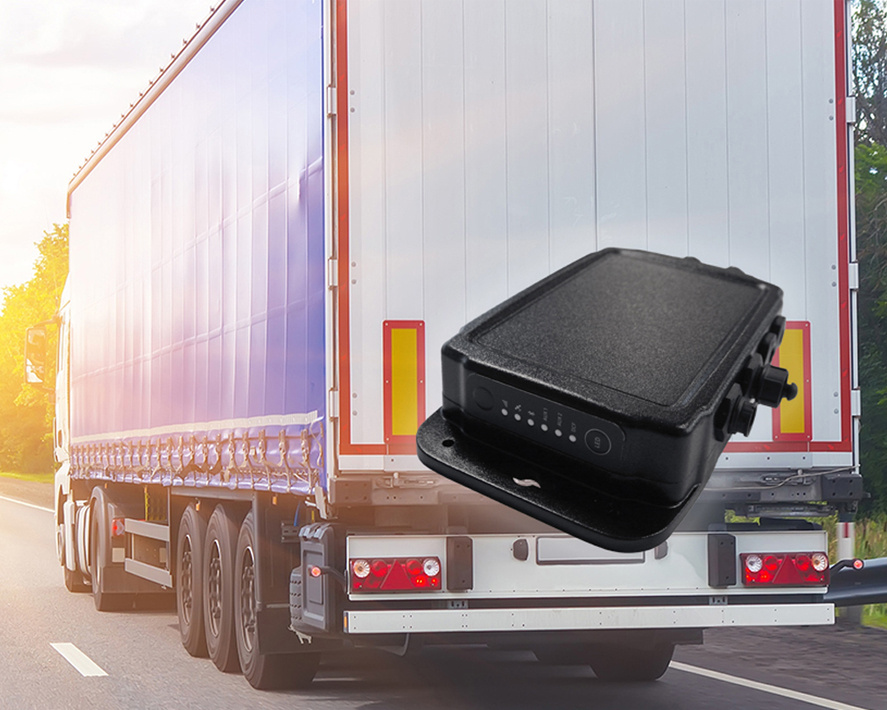
The Squarell Trailer Box provides non-intrusive access to the ISO 11992 communication between truck and trailer and converts the available information into harmonised trailer Parameter Groups.
For multi-trailer combinations, chassis information can be reported individually for each trailer in the combination.
Trailer Chassis — Know what is connected behind the truck.

