


Trailer Usage (TUSE)
Know how your trailer was used, not just how far it travelled
When a rental trailer returns after a month, the odometer tells only a small part of the story.
Two trailers may both have travelled 10,000 kilometres, while their actual use has been completely different.
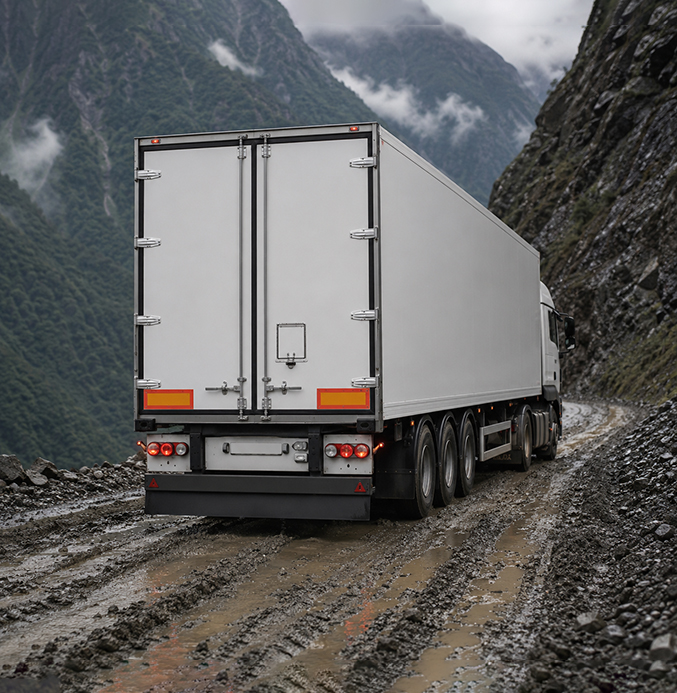
One may have travelled mainly on motorways with moderate loads and smooth driving. The other may have been heavily loaded, driven on poor roads and exposed to frequent harsh braking, acceleration and high cornering forces.
The Trailer Usage Parameter Group has been developed by Squarell to reveal that difference.
By combining trip information, axle load and measurements from the Trailer Box G-sensor, Trailer Usage provides insight into how the trailer has actually been driven and used.
Specifications
Name: Trailer Usage
Header: $TRAILERUSAGE
Subscription: Yes
Solution: Trailer Box
Trigger: Engine Off and Event
Buffer: Yes, default
Server header: Time and location
Key Parameters
Trip Profile
Each completed trip provides basic information about trailer utilisation:
- Number of trips
- Trip distance
- Trip duration
- Average trip speed
Together, these parameters provide the operational context needed to understand the more advanced usage information.
Axle Load
The combined axle load provides an indication of the weight carried by the trailer.
This is important because forces acting on an empty trailer have a very different effect from the same forces acting on a heavily loaded trailer.
Harsh Acceleration
Counts harsh acceleration events during the trip.
Frequent harsh acceleration can indicate an aggressive or less economical driving style and contributes to increased mechanical loads on the vehicle combination.
Harsh Braking
Counts harsh brake applications during the trip.
This provides an indication of driving style and can help identify trips with unusually intensive braking activity.
Bad Anticipation
Counts events classified as poor anticipation during the journey.
Combined with harsh braking and acceleration, this can contribute to a broader indication of how smoothly the vehicle combination has been driven.
Excess Forces
The Trailer Box G-sensor measures the forces acting on the trailer.
Trailer Usage calculates the accumulated excessive G-forces relative to the distance travelled.
This makes it possible to compare trips of different lengths and identify journeys during which the trailer experienced unusually high dynamic loads.
Road Quality
Vertical and lateral acceleration measured by the G-sensor is related to the distance travelled to provide an indication of road quality.
A trailer frequently operated on poor roads, construction sites or other demanding surfaces can therefore be distinguished from one mainly operated on smooth motorways.
Cornering Forces
The average forces experienced during cornering are combined with trailer weight.
This provides information about the dynamic loads placed on the trailer during cornering and can contribute to analysis of both usage conditions and driving behaviour.
Total Dynamic Load
Trailer Usage combines measured G-forces, trailer weight and distance to create an overall indication of the forces the trailer has experienced during operation.
This creates the basis for comparing the severity of use between trailers, trips and customers.
The complete Parameter Group and parameter definitions are available to Squarell partners.
10,000 kilometres are not always 10,000 kilometres
This is the key principle behind Trailer Usage.
Consider two identical rental trailers:
Trailer A
10,000 km
Mainly motorway operation
Moderate loads
Few harsh braking events
Low dynamic forces
Good road conditions
Trailer B
10,000 km
Frequent short trips
Heavy loads
Repeated harsh braking
High cornering forces
Poor road conditions
The odometer reports exactly the same utilisation.
Trailer Usage tells a completely different story.
From mileage to usage profile
Trailer Usage combines three different dimensions:
Trip Data
How much was the trailer used?
Driving Behaviour
How was the combination driven?
Dynamic Load
What physical forces did the trailer experience?
Together, these can provide a much richer usage profile than mileage or operating hours alone.
Particularly valuable for rental and leasing fleets
For trailer rental and leasing companies, the condition of a returned trailer can be difficult to relate to how it was used.
Trailer Usage provides objective information that can help explain the operating history between departure and return.
It can support:
- Rental fleet management
- Leasing applications
- Trailer condition assessment
- Usage comparison between customers
- Maintenance planning
- Abnormal-use detection
- Trailer lifecycle analysis
- Residual-value assessment
I would deliberately avoid presenting the PG as an automatic basis for charging customers for damage. The data provides valuable evidence about usage conditions, but physical damage may still require inspection and further assessment.
Supporting condition-based maintenance
Trailer Usage can also add a new dimension to trailer maintenance.
Traditional maintenance is largely based on:
Time + Distance
Trailer Usage adds:
Load + Road Quality + Driving Behaviour + Dynamic Forces
A trailer that has travelled relatively few kilometres under severe conditions may therefore deserve attention sooner than a trailer with higher mileage but relatively light use.
This creates another valuable input for condition-based maintenance.
ISO 11992, CANcliQ & G-sensor
ISO 11992 is a point-to-point communication network between truck and trailer. The Squarell Trailer Box therefore reads the available communication non-intrusively through CANcliQ, without interfering with the truck-to-trailer connection.
When the trailer is disconnected, the Squarell Checker Box can communicate actively with the trailer to retrieve additional information where supported.
Trailer Usage goes one step further.
The integrated G-sensor in the Trailer Box provides independent information about acceleration and the physical forces acting on the trailer. Combined with available trailer information such as axle load, this enables Squarell to derive information that is not simply available as a standard ISO 11992 parameter.
Business Value
Trailer Usage helps fleet owners, rental companies and leasing organisations to:
- Understand how trailers are actually used
- Compare usage between trailers
- Compare different operating conditions
- Identify severe operating conditions
- Gain insight into driving behaviour
- Detect poor road conditions
- Relate dynamic forces to trailer load
- Improve maintenance planning
- Support condition-based maintenance
- Build a meaningful trailer usage history
Why Squarell?
Most trailer telematics systems can tell you where a trailer has been and how many kilometres it travelled.
Squarell adds another question:
What happened to the trailer during those kilometres?
By combining vehicle network information with independent G-force measurements, Trailer Usage transforms basic utilisation data into meaningful information about driving behaviour, road conditions and the physical loads experienced by the trailer.
That makes Trailer Usage more than another data message.
It provides the beginning of a digital usage history for every trailer.
Related Product
Trailer Box
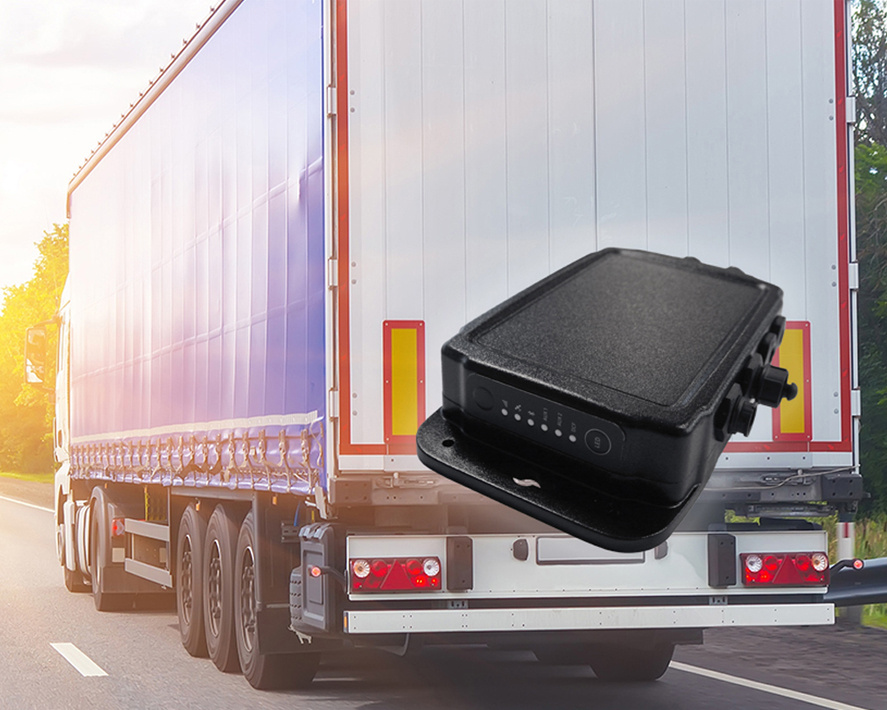
The Squarell Trailer Box combines non-intrusive ISO 11992 access, GNSS, mobile communication and an integrated G-sensor.
This combination enables Trailer Usage to analyse not only where and how far a trailer travelled, but also the conditions under which those kilometres were accumulated.
Trailer Usage — It’s not just how far it travelled. It’s how it got there.

