Trailer Intelligence
Turn every trailer into an intelligent fleet asset
Trailers are valuable fleet assets, but compared with trucks surprisingly little is often known about how they are used.
A conventional trailer tracking system can tell you where a trailer is. But fleet operators, rental companies and maintenance organisations need to know much more.
Which truck is connected? Is the trailer loaded? What is the condition of the brakes and tyres? Are there active warnings? How intensively has the trailer been used? And what happened during the kilometres it travelled?
The Squarell Trailer Box Solution transforms available trailer information into harmonised Vehicle Intelligence that can be used directly by fleet, maintenance and operational applications.

More than trailer tracking
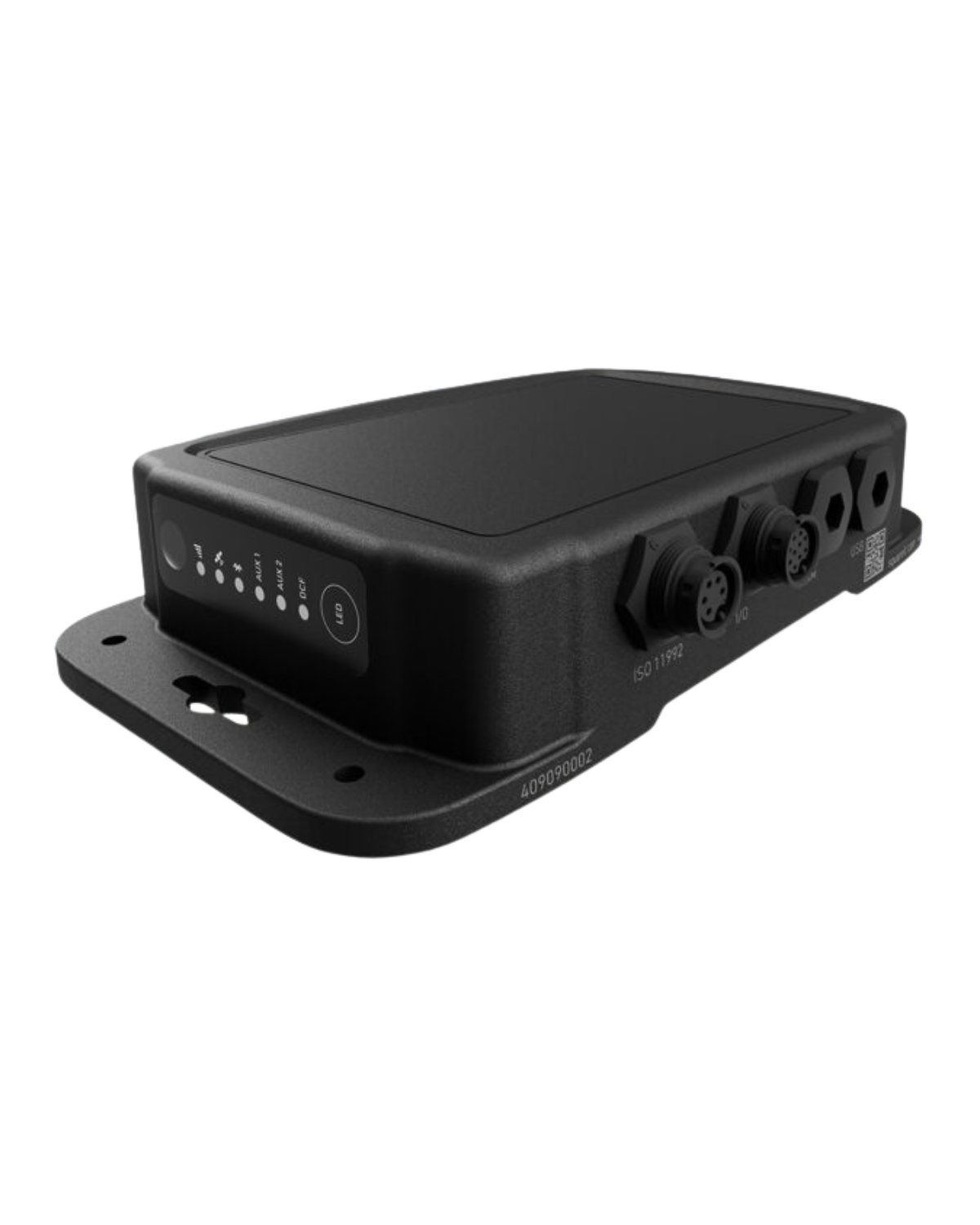
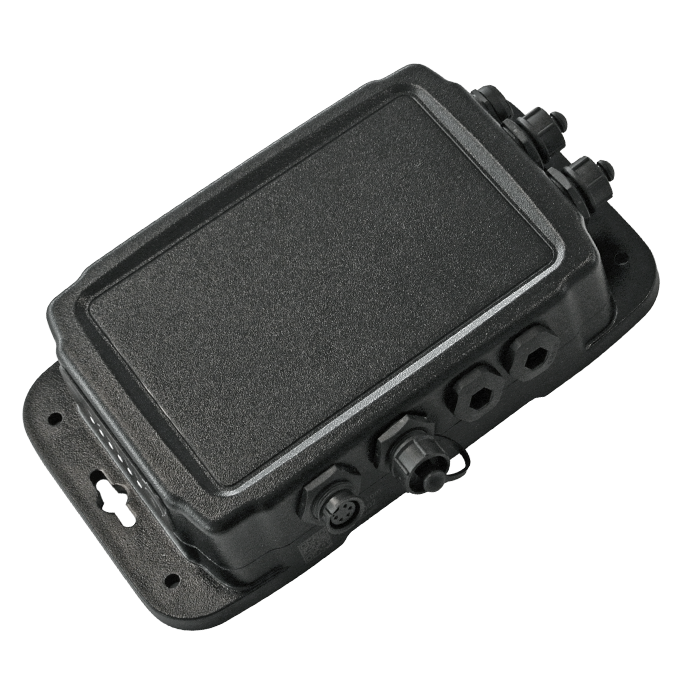
The Trailer Box combines several sources of information in one independent device:
- Non-intrusive ISO 11992 access through CANcliQ
- Integrated GNSS
- Mobile communication
- Bluetooth truck identification
- Integrated G-sensor
- Connections for external sensors and equipment
- Optional battery operation when disconnected
This allows the Trailer Box to continue providing useful information throughout the trailer’s operational life.
The result is not simply a connected trailer.
It is an intelligent fleet asset.
The challenge of trailer data
The ISO 11992 communication between truck and trailer is fundamentally different from a conventional CAN network.
It is a point-to-point communication system and should not be disturbed by an additional active device. Squarell therefore uses CANcliQ technology to read the communication non-intrusively, without interfering with the truck-to-trailer connection.
Some information cannot be obtained by passive listening alone. When the trailer is disconnected, the Squarell Checker Box can power the communication system and actively request additional information from the trailer.
Together, these technologies enable Squarell to obtain both live and additional trailer information while respecting the special architecture of ISO 11992.
Trailer Parameter Groups
The Trailer Box converts the available information into specialised, harmonised Parameter Groups.
Trailer Chassis (TCHA)
Know the trailer behind the truck.
Provides information about the physical trailer configuration, including trailer type, number and position of axles, dimensions and chassis control functions.
It enables the application to understand not only that a trailer is connected, but what kind of trailer it is.
Trailer Cargo (TCAR)
Know what your trailer is carrying, not just where it is.
Provides information about individual axle loads, total axle load, cargo weight, ride height, load transfer and ramp position.
This supports payload monitoring, load distribution analysis and greater insight into loading and unloading operations.
Trailer Brake (TBRK)
Know which brake needs attention before the trailer reaches the workshop.
Provides individual brake lining condition and brake temperature information across multiple axles.
This supports remote brake monitoring and the transition from scheduled inspections towards condition-based maintenance.
Trailer TPMS (TTPMS)
The tyres already know. Make sure the fleet knows too.
Provides individual tyre pressure and temperature information for up to 24 tyre positions per trailer.
Instead of keeping valuable TPMS information inside the trailer, the Trailer Box makes it available remotely for tyre management, maintenance and fleet applications.
Trailer Diagnostics (TDIA)
Know which trailer needs attention before it reaches the workshop.
Combines trailer usage, service information and EBS warning status.
Distance, operating hours, trip count and remaining service distance or time help maintenance organisations plan service, while EBS warnings can identify trailers requiring technical attention.
Trailer Drive (TDRV)
See what happens behind the truck while it is happening.
Provides live information about trailer speed, pneumatic pressure, braking activity, emergency braking and ABS/VDC interventions.
Individual brake cylinder pressures provide additional insight into how braking force is being applied across the trailer.
Trailer Usage (TUSE)
It’s not just how far it travelled. It’s how it got there.
Trailer Usage adds a new dimension to trailer intelligence.
Using trip information, axle load and the integrated G-sensor, the PG provides information about:
- Trip distance and duration
- Average speed
- Trailer load
- Harsh acceleration
- Harsh braking
- Bad anticipation
- Excessive G-forces
- Road quality
- Cornering forces
- Total dynamic load
This makes it possible to understand not only how much a trailer has been used, but under what conditions.
For rental and leasing companies in particular, this provides information that mileage alone can never reveal.
One trailer, one complete picture
The real strength of the Trailer Box Solution comes from combining the Parameter Groups.
Identity
Which truck and trailer combination is operating?
Configuration
What type of trailer is connected?
Cargo
How heavily is it loaded?
Drive
How is it behaving on the road?
Brakes & TPMS
What is the condition of critical components?
Diagnostics & Alerts
Does something require attention?
Usage
How has the trailer actually been treated?
Together, these Parameter Groups create a much more complete digital picture of the trailer throughout its operational life.
From preventive to condition-based maintenance
Trailer maintenance has traditionally been based largely on time, mileage and physical inspection.
The Trailer Box adds actual operating information:
Distance + Hours + Load + Brake Wear + Tyre Condition + Warnings + Road Quality + Dynamic Forces
This enables maintenance decisions to increasingly reflect how the trailer has actually been used.
A lightly loaded trailer covering mainly motorway kilometres may require very different attention from a heavily loaded trailer operating on poor roads—even when both have travelled exactly the same distance.
Particularly valuable for rental and leasing
A rental company may receive a trailer back after a month and know that it travelled 12,000 kilometres.
But those 12,000 kilometres tell almost nothing about the conditions under which the asset was used.
Trailer Usage combined with the other Trailer Parameter Groups can provide insight into:
Mileage → Load → Driving Behaviour → Road Conditions → Dynamic Forces → Brake Condition → Tyre Condition → Warnings
This creates the foundation for a meaningful digital usage history of the asset.
Measurable Business Value
The value of Trailer Intelligence can be measured in everyday fleet operations.
The Trailer Box Solution can help organisations achieve:
- Higher trailer utilisation
know which trailers are active, connected, loaded or available. - Reduced downtime
identify brake, tyre, EBS and maintenance issues before they result in an unexpected stop. - Lower maintenance costs
move from fixed inspection intervals towards maintenance based on actual condition and usage. - Longer tyre lifetime
remotely monitor tyre pressure and temperature and identify abnormal conditions earlier. - Improved brake maintenance
monitor individual brake lining condition and temperature instead of relying only on periodic inspection. - Better asset control
automatically identify truck-trailer combinations and maintain an operational history for each trailer.
- Better payload utilisation
use axle load and cargo weight information to understand how trailers are being loaded. - Reduced administrative effort
automatically collect information that otherwise requires driver input or manual inspection. - Better rental and leasing insight
compare not only kilometres travelled but the severity and conditions of use. - Improved residual-value management
build a more complete usage and maintenance history over the lifetime of the trailer. - Better fleet decisions
combine technical, operational and usage information in one harmonised data source.
And importantly, many of these benefits can be translated into fleet KPIs:
Cost per trailer kilometre ↓
Unplanned downtime ↓
Tyre cost per kilometre ↓
Maintenance cost per kilometre ↓
Trailer utilisation ↑
Workshop interventions ↓
Asset availability ↑
Useful trailer lifetime ↑
Why Squarell?
Most trailer telematics starts with a GPS position.
Squarell starts with the trailer itself.
By combining non-intrusive ISO 11992 access, independent sensors, GNSS, communication and harmonised Parameter Groups, the Trailer Box turns technical trailer information into intelligence that can be used throughout the organisation.
From fleet operations to maintenance, rental, leasing and asset management:
Trailer Box — Turning trailers into intelligent fleet assets.